FACTORY FILLER FOR TAIL LIGHT EXTENSIONS

You can purchase a whole assortment of seals, gaskets, rubber and more from a host of aftermarket companies. When I did the rebuild on my 69, I purchased a kit that had vertically everything I needed. Because my Road Runner was stripped of everything and taken down to bare metal then painstakingly brought back to life, we required the complete OEM package, including rubber for doors, trunk and glass, bump stoppers and guides for hood, pad for gas tank, rubber and steel cover plates for engine compartment inspection openings, and much-more more. You will save a lot of money purchasing the complete kits, rather piecing it out. Even if you don’t buy directly from them you’ll find pretty much everything you need from Classics Industry’s Mopar catalog.
It’s not hard for your project to turn into a huge money-pit!! Over the years I’ve dropped a lot of $$$ at Classic Industry, and also at Year One, Summit, Dakota Digital, Rick’s Tanks, Griffin, Retro Sound, Classic Auto Air, Leather Hide Store, Diamond Back, Craigar, Indy Cylinder Heads, EZ FAST 2.0, B&M, ultra cut plush pile carpet from “Stock Carpets”, 200 lbs of Dynamat… I could go on and on, but probably get the picture. After making every attempt to hold myself to a modest budget, the car just seemed to take on its own life… it happens, so be prepared; however, to your original question, I highly recommend getting a Classics Industry’s Mopar Catalog (for reference)!!
What may really surprise you is after trying for over a month to get quality tail light bezels and lens through all the usual distributors, like AMD, JEGS, and Summit, I finally found a manufacturer/distributor in Canada. I’ve also purchased several other products from Canadian companies, including my gas tank vapor canister (considered to be the best canister on the market). Unfortunately, according to the owner, he’ll be shutting the business down in a couple months due to the Trump tariffs. He says basically the entire Country no longer trusts the US!!! I’ve had firsthand countless car-related companies and shops tell the same thing… can’t get parts!!! One high end custom shop (owner) told me last week… and I quote - “all that money and resources you put in that Road Runner - if you were starting from scratch - add 50%). Now I’m afraid to drive it!!!
Take care and good luck. Us Road Runner owners have to stick together!!!

 
I too have bought tons of parts etc. from Classic and they always come through. The problem is that they sent "paint gaskets' for the tail light extensions and they do not really work. According to Kevin Shaw who did a great Road Runner restoration book, they used a "filler" on the assembly line. I used to work at the factory but I got drafted in September '65, I actually joined the Navy instead) and the Road Runner production started 2 years later. I wonder if it was "seam filler" they used like a caulk, or did they use bondo?
 
Wow… a fellow military guy. I joined the Army and started basic training on January 12, 1966. Vietnam 66 & 67. Got home and bought a 64 GTO, silver with red interior and tri-power. Traded it for a big road bike and in October 1968 bought a brand new 69 Road Runner - Ivy Green with the upgraded decor’ package, mag wheels, redlines, two-tone green interior with a 383 and 4-speed. Out the door was $2974! Drove it to work Monday through Friday and went to the drag strip on either a Friday night or Saturday. My current Road Runner is a tribute to that car!
 
3M strip caulk - used between panels like fender to inner fender and other places luke the quarter extensions and pretty sure it's very similar to what the factory used.
 
Thought I used a product called seam sealer but then it was a while ago since doing the work. The old age thing. LOL. Good luck with the project and try to make it fun and not a job.
 
What ever you decide to use, make sure it will solidly adhere to any surface (bare metal and/or paint), can be sanded, is paintable when cured, and is flexible. On the original assembly lines, they would apply a thin rope-like gue in the seams and wipe them down (tail light assembly, panel below rear glass). Where the roof mated to the quarter panels, they used a harder product, that when sanded would hide the seams. At one time, they still used lead, but don’t think they were still doing any of that in the late 60’s
 
Wow… a fellow military guy. I joined the Army and started basic training on January 12, 1966. Vietnam 66 & 67. Got home and bought a 64 GTO, silver with red interior and tri-power. Traded it for a big road bike and in October 1968 bought a brand new 69 Road Runner - Ivy Green with the upgraded decor’ package, mag wheels, redlines, two-tone green interior with a 383 and 4-speed. Out the door was $2974! Drove it to work Monday through Friday and went to the drag strip on either a Friday night or Saturday. My current Road Runner is a tribute to that I was in Vie
 
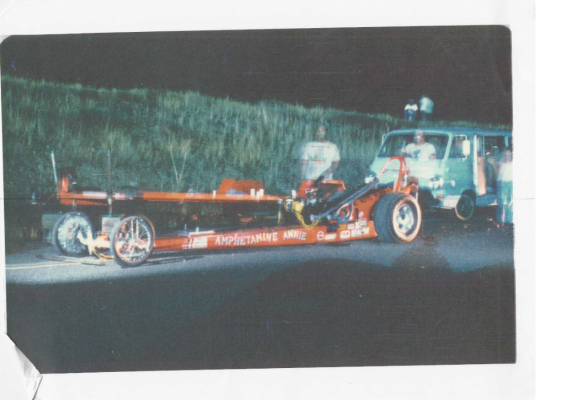
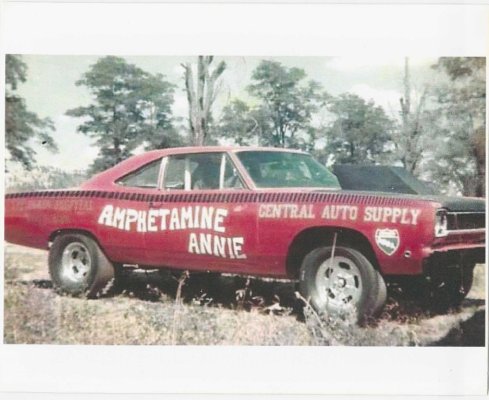
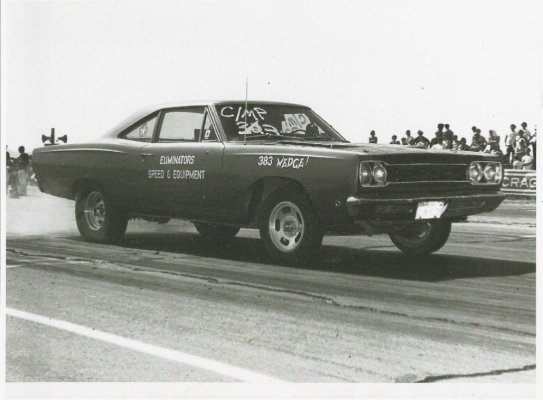
I was in Vietnam on the U.S.S. Boston CAG-1. We did quite a bit gunfire support for the Army as well as the Marines like "I" Corp area. We also cruised a mile off the coast 24/7 blowing the shit out of everything that fired at us or was NVA related. I boght my 68 Road Runner that was 18 months old in 1970. Daily driver but I raced it hard every single weekend. 383 four speed. Won "King of the Hill" twice and later I lightened it and got it down to 10.44 @ 2350 ft above sea level in Spokane, Washington. Foolishly, I quit racing it and built a front motor 440 dragster in which I never won, I did hit a 9.44 @ 141 mph with it. Only one second faster than the Road Runner. What a Waste!Scan_20260218.png
 
Great story that I can certainly relate to. Raced my original 69 Road Runner at least three times a month at the drag strip in Carlsbad CA - about an hour drive north from where I lived in San Diego. A friend (who later became a legion in drag racing) had me remove the heads. At his machine shop in his garage he did a three-angle valve job, big super heavy springs, and we added a set of Hooker headers. At the drag strip it went from a 14.0 et to a 12.7 et. It’s all in the heads!! After removing the back seat and switching to a set of cheaters I got it down to 12.1. That was the best I ever did with it. My current Road Runner, with the right tires, should hit mid 9’s. It dyno’d at 918 hp and 900 lbs torque (that was a bench dyno)! Rear wheels should be around 825/850!!
 
Yes it should. I did my 10.44 with a 383 4 speed, with ported and poliched heads. block bored .60 over giving me 390 cublic inches, with Hooker 2" race headers, Crane roller cam. battleship springs, with 4.56 gears, 11" wide slicks, 90:10 shocks in front, adjustable snubber (Home made) with spring clamps on the front side of leaf springs (a la, Ramchargers set up). Edelbrock Tarantula manifold (not the torquer) with single 850 double pumper with jets in the 90's. The trick was I lightened it to 2,690 pounds with Home made lift off fiberglas hood, no hood springs, no window mechanisms with plexiglas side windows, no back seat, BAJA fiberglas seats. I also made a four speed ( crash box) by grinding off every other gear in the synchros and the sliding gears

Scan_20260218 (2).jpg

Scan_20260218.jpg
 
Back
Top