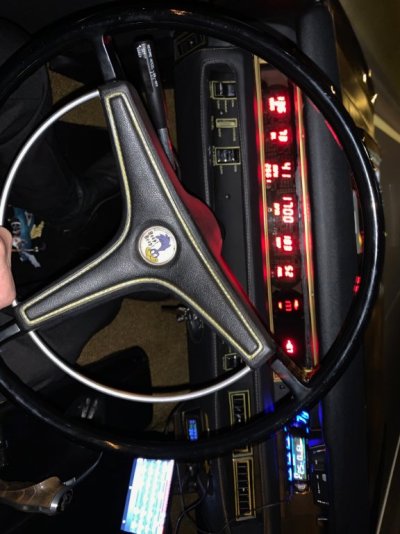
Original Ammeters

Newbird

Active Member
Joined
Aug 7, 2025
Messages
26
Reaction score
7
Location
Central Washington
How many still have the original ammeter and have you had any problems with it. I'm trying to reinstall the original instrument panel and the PO cut the 10 gauge wire that I assume went to the ammeter. Being a prior Mustang restoration guy I continued to use the old ammeter even though there were discussions about fires and shorts. I never had a problem but wondered if Mopar was any different?
 
I’ve used many in the older cars. Only real problems I’ve seen are in the tin grill 70s trucks. They cheapened them by then.

I’ve had the muscle with them bypassed and that works well with no worries about it and all the possibilities. So whatever way you do will be ok.
 
The only issue Ive seen is the nuts can come loose with the hot and cold cycles and start burning the board. Make sure the board is good and the nuts are tight.
 
I have owned many old Mopars since 1979 and I have never had or even seen one that had a fire caused by the ammeter but I guessit does happen. IMO if all your wiring and connectors are in good shape and not corroded and you don't have too much extra strain on the system like big draw stereos etc. then you will probably be fine.
That said - ALWAYS carry an extinguisher or fire stick and keep a wrench that fits the battery terminals handy.
 
How many still have the original ammeter and have you had any problems with it. I'm trying to reinstall the original instrument panel and the PO cut the 10 gauge wire that I assume went to the ammeter. Being a prior Mustang restoration guy I continued to use the old ammeter even though there were discussions about fires and shorts. I never had a problem but wondered if Mopar was any different?
You may consider changing the insulation between the two terminals on the ammeter as well just to be safe
 
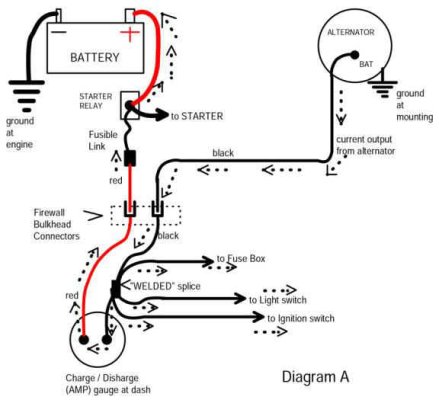
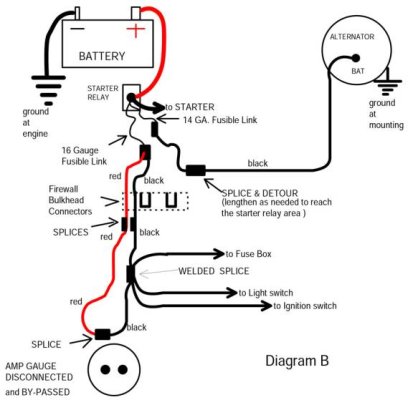
Thanks for all the comments. My question came up when I started unraveling the wire hacks in the car and found the ten gauge red and black wires cut which basically made the ammeter inoperable. The PO had wire nutted the red and black wires together through a fused connector. At some point the load was so great on the fused splice it didn't just blow the fuse it melted the fuse and fuse receptacle. I found an old posting describing a fix for the system I'm going to try to see if I can correct the problems. At this point I don't know how the car even ran with the battery and alternator output essentially disconnected at the melted fuse and receptacle connection.
 
Thanks, I've seen that before and it pretty much follows the wiring fix of the old posting. Since the ammeter hasn't been in the circuit I going to wire the system according to the attached drawing and the final drawing of the video. I found a digital volt meter on Amazon that I think I can replace the ammeter with and save the old ammeter in case someone ever inherits this car so they can put it back to the original condition. There are other ways to do it but I'll try the easiest method.

amp-ga18.jpgamp-ga27.jpg
 
There has been, and continues to be, a lot of old Chrysler/Mopar ammeter misinformation circulating around in this hobby. Fact is, there is nothing wrong with the original ammeters as originally designed when the system is loaded correctly and with well-maintained connections/terminations. If needed, there are several other ways to modify this system to handle added loads and retain the original ammeter as well.
 
Last edited:
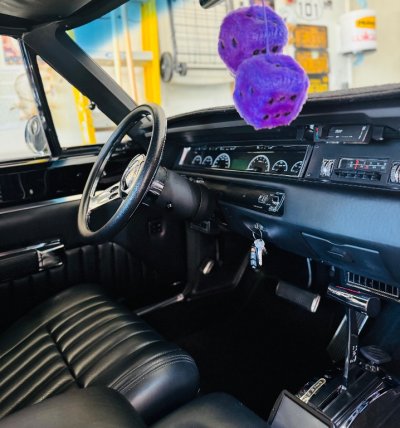
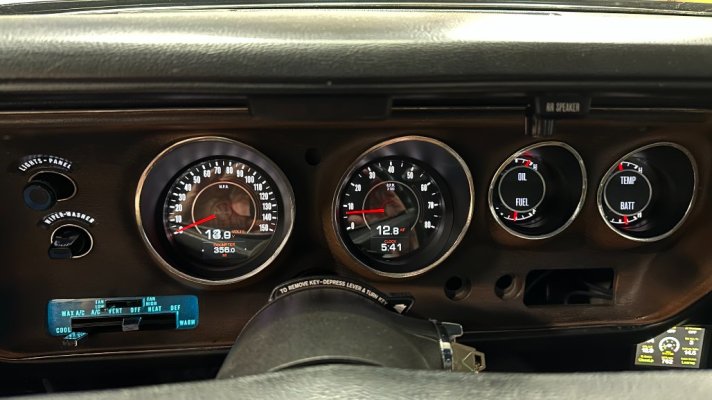
Unless you are dead-set on 100% original restoration look, I suggest swapping the amp gauge for a volts gauge. A lot easier to install and more accurate. After coming close to having a stroke while dealing with all the original gauges, I finally gave in and went with the Dakota Digital Cluster. It has every gauge you’ll ever need, is programmable, has a very cool center readout (also programmable) and looks good.
They make two two versions… one that looks stock and one with the speedometer and tach each the same size (the one I chose).

IMG_3118.jpeg
 
Unless you are dead-set on 100% original restoration look, I suggest swapping the amp gauge for a volts gauge. A lot easier to install and more accurate. After coming close to having a stroke while dealing with all the original gauges, I finally gave in and went with the Dakota Digital Cluster. It has every gauge you’ll ever need, is programmable, has a very cool center readout (also programmable) and looks good.
They make two two versions… one that looks stock and one with the speedometer and tach each the same size (the one I chose).
A voltmeter more accurate? More accurate at what exactly? Two different animals monitoring two different electrical properties. A voltmeter can only tell you if the charging system is functioning or not, an idiot light can do the same thing. Much more information is available from the ammeter if you understand what it is indicating when it is loaded correctly and the related wiring is maintained in good operating condition. Agree, the Dakota Digital is a great option to have available now but not for everybody, a bit spendy. Run one in one of my cars, but the voltmeter only is somewhat useless to me. There are good reasons ammeters were used in automotive production for decades. Any serious real time battery condition monitoring still involves an ammeter in one form or another.
IMG_E0315.JPG
 
760673064.jpg the alternative is intellitronics Dash gauge digital set the two on the end one is vacuum and one is trans temp all fabricated myself works perfect and yes I prefer voltage because I can see how much is being used and if something's not working I know immediately if an amp gauge is putting out 10 amps it's still going to read amperage and show that it's putting out but a voltage if it drops below 12 5 you're in trouble
 
Last edited:
All 7 of my classic cars are still running their original ammeters and original wiring. However, I do carry a fire extinguisher and fire blanket in each of the cars as well. Even in case of a fuel fire.
 
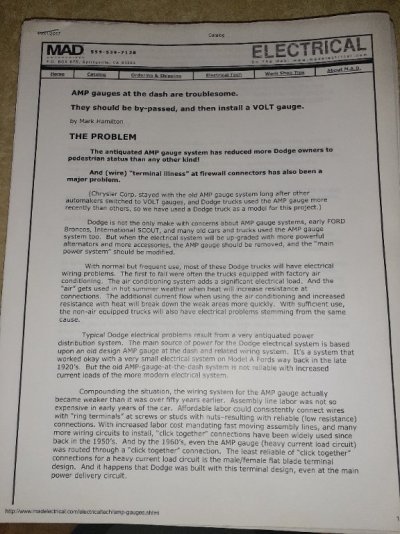
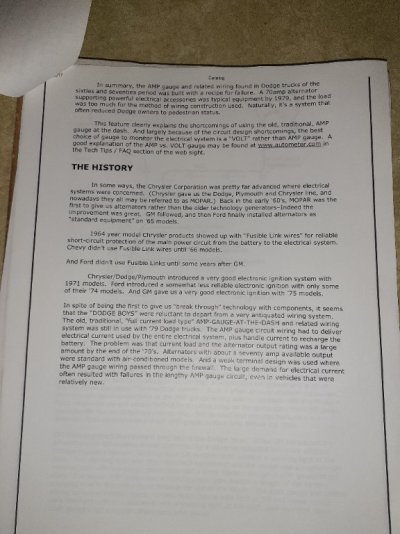
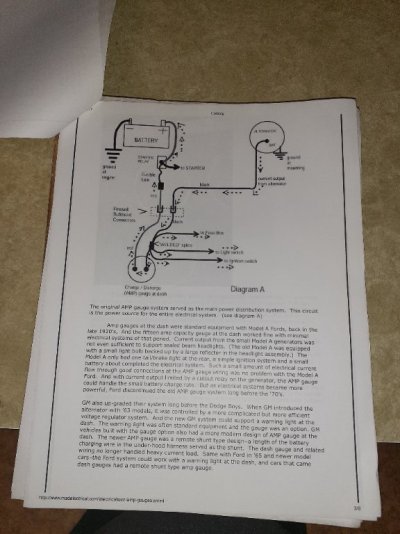
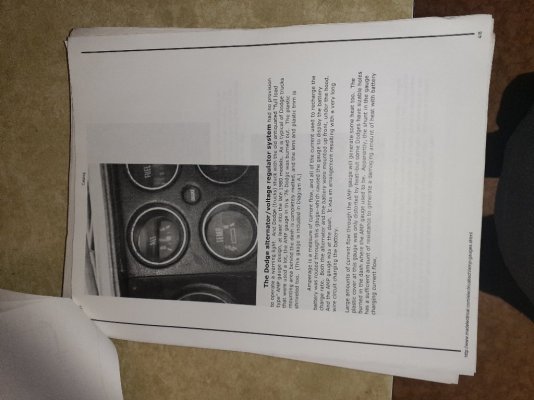
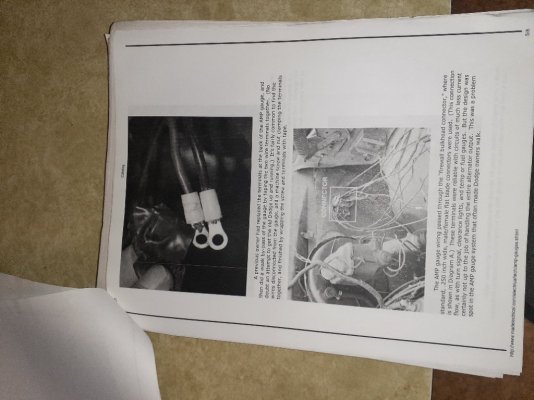
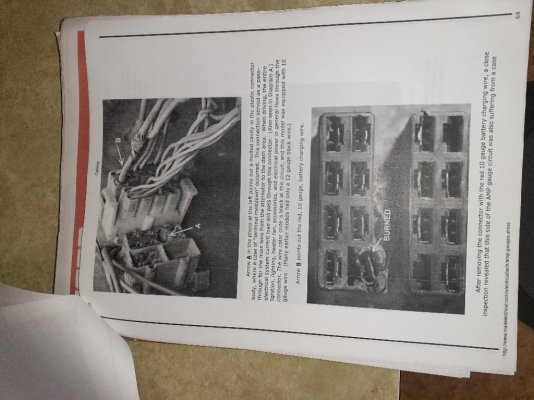
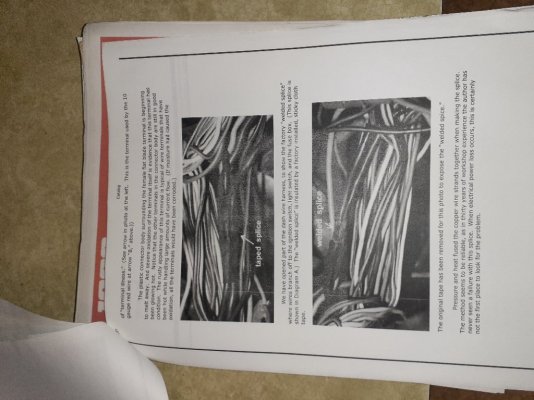
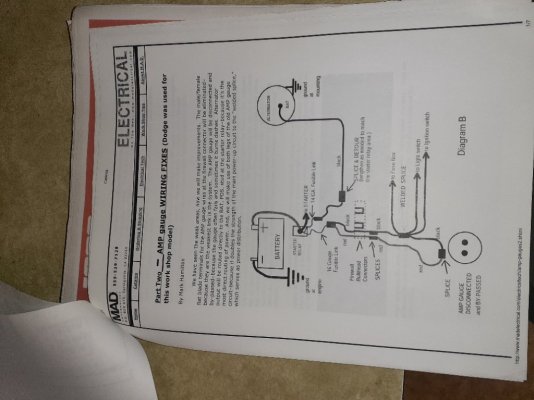
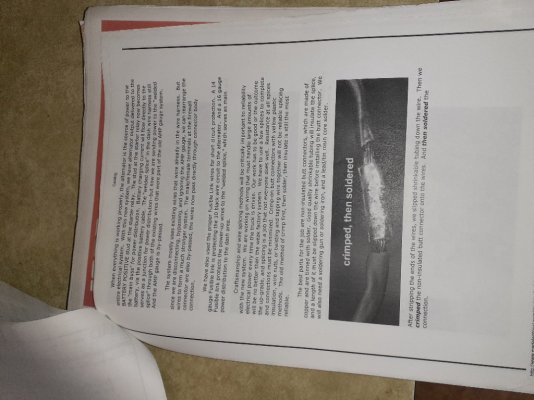
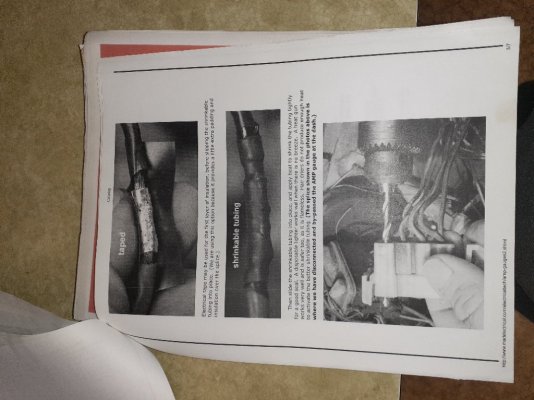
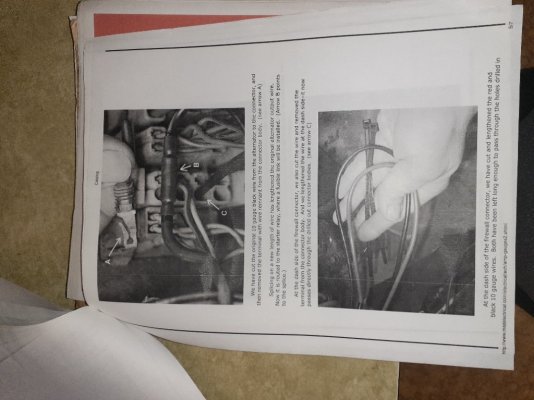
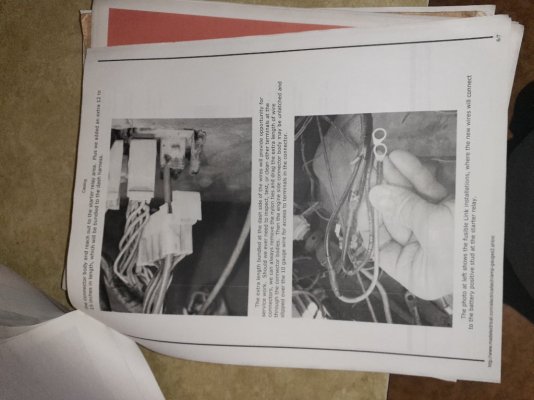
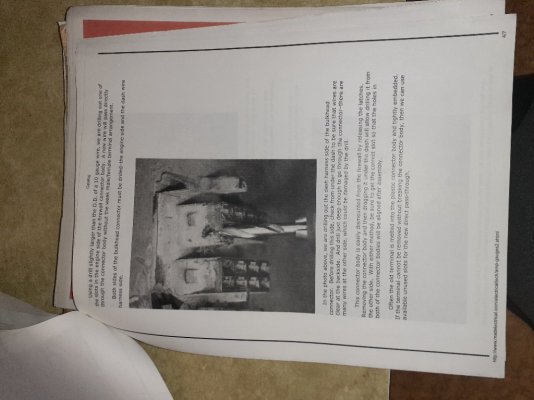
I had been looking for this information and ran across it looking through my factory service manual for how to remove a wiper motor so I figured I would post this to help everybody understand the issues with an amp meter as opposed to a voltmeter do with it what you will I hope it helps

20260416_132932.jpg

20260416_132944.jpg

20260416_132954.jpg

20260416_133002.jpg

20260416_133012.jpg

20260416_133022.jpg

20260416_133030.jpg

20260416_133042.jpg

20260416_133049.jpg

20260416_133056.jpg
 
The last picture is number four of the second set if you look at the numbers at the bottom corners sorry my mistake
 
I had been looking for this information and ran across it looking through my factory service manual for how to remove a wiper motor so I figured I would post this to help everybody understand the issues with an amp meter as opposed to a voltmeter do with it what you will I hope it helps

View attachment 40077

View attachment 40078

View attachment 40079

View attachment 40080

View attachment 40081

View attachment 40082

View attachment 40083

View attachment 40084

View attachment 40085

View attachment 40086
Read it carefully, that artical is still on-line. This long touted Mad Electrical article is about the later Dodge trunk plastic framed ammeter issues, late seventies specifically, nothing to do with earlier passenger car ammeters, completely different construction. Most truck ammeter meltdowns were the result of misplaced added loading at the battery anyway, exposing the ammeter and related wiring to more current than it was designed to handle for long periods of time. Can’t conflate the later Truck ammeter issues with every other Chrysler product built from that time.
 
Last edited:
Read it carefully, that artical is still on-line. This long touted Mad Electrical article is about the later Dodge trunk plastic framed ammeter issues, late seventies specifically, nothing to do with earlier passenger car ammeters, completely different construction. Most truck ammeter meltdowns were the result of misplaced added loading at the battery anyway, exposing the ammeter and related wiring to more current than it was designed to handle for long periods of time. Can’t conflate the later Truck ammeter issues with every other Chrysler product built from that time.
It is the same basic principle that happens to our older cars I just thought it would be helpful sorry to have upset you the environment that you are in in the state that you're at is different than the environment in Michigan or Florida which I have 60 years of experience working on these cars I have seen failures for many different reasons the point is it is an area of trouble on any year amp meter. If you're not wise enough to look at this area and to address any problems and your car Burns To The Ground then it's your fault I have seen cars have this happen to them because they don't want to do basic maintenance and inspections I'm sorry that you have had different experiences and not seeing the things I have but then again I haven't seen what you have once again I'm sorry for upsetting you in life and disagreeing with you but my experience are mine God bless you
 
Last edited:
Back
Top