Original Ammeters

VRD - "I have seen cars have this happen to them because they don't want to do basic maintenance and inspections" As mentioned most electrical issues are caused by overloading, old brittle wiring or dirty, corroded connections NOT due to any bad engineering or design of the system and you even said that in your response. It may have happened but in 50+ years of owning and being around them I personally have never seen a Mopar have an electrical fire that wasn`t caused by old brittle, corroded or hacked wiring, dirty, corroded connections or overloaded.
 
VRD - "I have seen cars have this happen to them because they don't want to do basic maintenance and inspections" As mentioned most electrical issues are caused by overloading, old brittle wiring or dirty, corroded connections NOT due to any bad engineering or design of the system and you even said that in your response. It may have happened but in 50+ years of owning and being around them I personally have never seen a Mopar have an electrical fire that wasn`t caused by old brittle, corroded or hacked wiring, dirty, corroded connections or overloaded.
Thank you and that's what I found with my car when I saw smoking coming from the dash years ago and went up in there and said oh my so thank you and hopefully this won't happen to anybody if they'll just do the maintenance
 
Upset? To be clear, no one here is upset about anything. Only about 50 years’ experience working on these cars, many at the dealers when those trucks were coming in with melted plastic ammeters after the installation of all the heavy-load aftermarket add-on accessories connected directly to the battery. Environment? Not following. Never saw one passenger car ammeter issue that couldn’t be attributed directly to either terminal abuse at the ammeter or misplaced loading at the battery. Big difference in how the later truck ammeters were constructed vs the earlier passenger car ammeter. The bulkhead connectors in this charge path are the weakest link in this charging system by far.
There's a post right now on 4V bodies only on a guy with a Coronet that just had his Dash smoke and catch the car on fire because of the amp meter you should read that post it's interesting
 
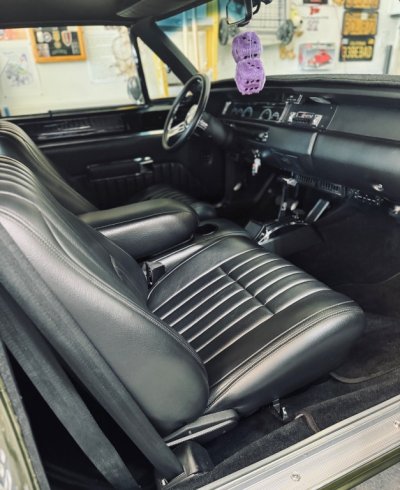
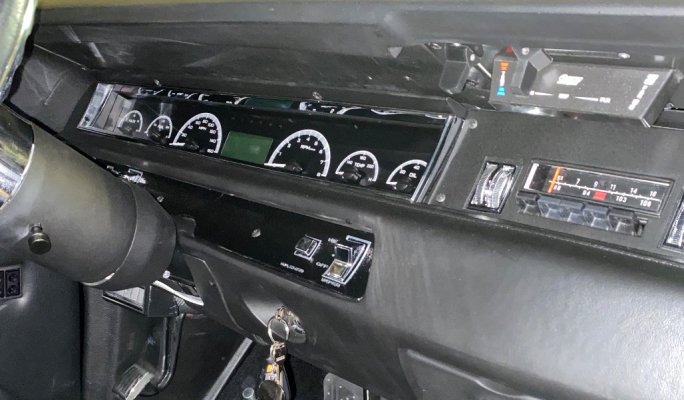
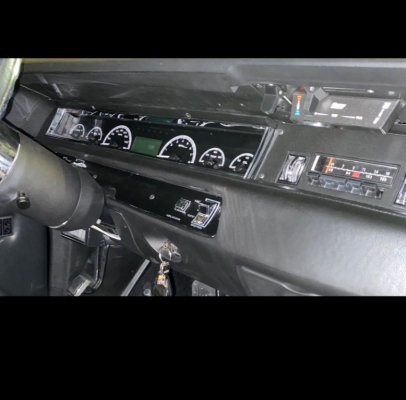
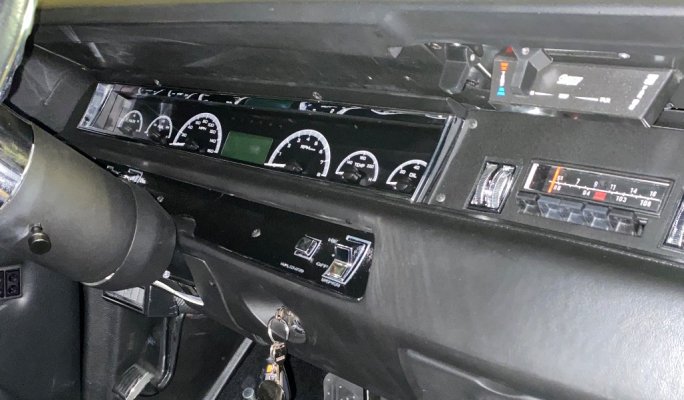
The only reason to hang onto an amp meter is if your car is a “100% numbers matching” car. Otherwise dump the amp meter and go with a volt meter, which is completely (safely) wired differently than the amp meter. My 69 Road Runner has the Dakota Digital cluster, in a completely restored to stock dashboard, that has everything you will ever need and is right in front of you!

IMG_3116.jpeg

IMG_0021.jpeg
 
The only reason to hang onto an amp meter is if your car is a “100% numbers matching” car. Otherwise dump the amp meter and go with a volt meter, which is completely (safely) wired differently than the amp meter. My 69 Road Runner has the Dakota Digital cluster, in a completely restored to stock dashboard, that has everything you will ever need and is right in front of you!

View attachment 40247

View attachment 40249
There's an upgraded circuit board to replace the old style amp meter I can't remember where I saw it but that way you can still keep the amp meter but with a circuit board it's much smaller circuitry and it's fused
 
There's a post right now on 4V bodies only on a guy with a Coronet that just had his Dash smoke and catch the car on fire because of the amp meter you should read that post it's interesting
I assume you are talking about a thread called “Bummer!” in the electrical section currently on the ForBBodiesOnly forum. Reads more like a short in the unfused wiring with the blown fusible link while driving, creating a stall, prior to visible smoke. Sounds like some neglect of the weakest link in the charging system, the Packard terminals in the bulkhead connector charge circuit, as a contributing factor to the overheated/burned bulkhead terminal block as well. A properly maintained ammeter and related connections would not account for the described symptoms and damage. Correctly loaded, should be very little charging current taking place through the Packards while driving with a fully charged battery. Again, a well-maintained ammeter and related connections, correctly loaded and operated within its design limits won’t cause dash fires.
 
I assume you are talking about a thread called “Bummer!” in the electrical section currently on the ForBBodiesOnly forum. Reads more like a short in the unfused wiring with the blown fusible link while driving, creating a stall, prior to visible smoke. Sounds like some neglect of the weakest link in the charging system, the Packard terminals in the bulkhead connector charge circuit, as a contributing factor to the overheated/burned bulkhead terminal block as well. A properly maintained ammeter and related connections would not account for the described symptoms and damage. Correctly loaded, should be very little charging current taking place through the Packards while driving with a fully charged battery. Again, a well-maintained ammeter and related connections, correctly loaded and operated within its design limits won’t cause dash fires.
So this article from Mopar connection would also be wrong ?https://moparconnectionmagazine.com...ks-convert-your-mopar-ammeter-to-a-voltmeter/
 
Wrong about what exactly? It’s an advertisement article.
"...and that was a common problem for many Mopars as every ounce of current ran through the factory ammeter to the battery."
This statment is dead wrong. Again, Mr Shaw has not demonstrated a hign level of eletrical expertise to make statements like that. Fact of the matter is, on a stock healthy Chrysler ammeter-based charging system, fully charged battery, there will be little to no current flowing the ammeter while in operation, only battery trickle charging current. All running vehicle loads will draw power from the alternator on the alternator side of the ammeter, none of that current will flow through the ammeter or its related wiring.
 
Last edited:
Wrong about what exactly? It’s an advertisement article.
"...and that was a common problem for many Mopars as every ounce of current ran through the factory ammeter to the battery."
This statment is dead wrong. Again, Mr Shaw has not demonstrated a hign level of eletrical expertise to make statements like that.
I'm just pointing out you said this was not a common problem this does not happen you never experienced it in your life I just wanted to share life experience with you hopefully you would realize that others opinions could be real also and have a valid point instead of dismissing them and being disrespectful to those just trying to give a different opinion than yours and experiences that they've had are as important as yours God bless you and have a nice life
 
I'm just pointing out you said this was not a common problem this does not happen you never experienced it in your life I just wanted to share life experience with you hopefully you would realize that others opinions could be real also and have a valid point instead of dismissing them and being disrespectful to those just trying to give a different opinion than yours and experiences that they've had are as important as yours God bless you and have a nice life
Common? After all these years, electrical abuse, misloading, and neglect is very common, resulting in mishaps of all kinds, doesn’t mean the ammeter was the root cause of anything. Will have to challenge the notion that I’ve been disrespectful to anyone in all my years of on-line posting about this type of subject matter. I only address opinions and other misinformation when they conflict with electrical fact/reality when involved in these discussions. The never-ending bad opinions and misinformation circulating around these electrical subjects does nothing to advance the safety of the hobby. Never said I’ve never seen electrical fires in cars, have seen many. Never one caused directly by a correctly loaded well-maintained ammeter or ammeter connections when operated within current range it was designed for. One exception, the later seventies plastic framed truck cluster fiasco that your Mad Electrical article was written about specifically. Nothing to do with early passenger cars ammeters.
 
Last edited:
Common? After all these years, electrical abuse, misloading, and neglect is very common, resulting in mishaps of all kinds, doesn’t mean the ammeter was the root cause of anything. Will have to challenge the notion that I’ve been disrespectful to anyone in all my years of on-line posting about this type of subject matter. I only address opinions and other misinformation when they conflict with electrical fact/reality when involved in these discussions. The never-ending bad opinions and misinformation circulating around these electrical subjects does nothing to advance the safety of the hobby. Never said I’ve never seen electrical fires in cars, have seen many. Never one caused directly by a correctly loaded well-maintained ammeter or ammeter connections when operated within current range it was designed for. One exception, the later seventies plastic framed truck cluster fiasco that your the Mad Electrical article was written about specifically. Nothing to do with early passenger cars ammeters.
If you read the whole post on bummer the guy with the 64 the just said his dash smoked and melted the wiring and the fuse link save the car he has no external components on his system and it is stock as I said before different environments cause different problems on cars please be willing and open to others opinions it would be nice
 
Agree with VRD… disrespectful!! I think you should work on having an open mind and pay attention to what others think and are saying. If you disagree then politely say so in a more positive, constructive and polite manner!! Everyone has an opinion and those opinions aren’t necessarily right or wrong… they are just opinions!! Deal with it!!!
 
Pretty much a paid advertisement and NOT an accurate article - "Let Redline Gauge Works Convert Your Mopar Ammeter to a Voltmeter".
 
Pretty much a paid advertisement and NOT an accurate article - "Let Redline Gauge Works Convert Your Mopar Ammeter to a Voltmeter".
It is an option for someone not all of us but it's something that somebody might want to do to keep their Dash looking stock but not have a worry of a problem later. It's not for me I wouldn't do it ,unless I had a concourse car that I wanted perfect on the dash, and wouldn't want any chance of the amp meter burning my car up then I might do this.
 
"The engine quit, taking out my power steering and brakes. I quickly wrestled my car around a corner onto a side street and stopped. Some smoke rolled out from under the dash."

I read whole OP. The first symptom was an engine stall as the fusible link opened due to high sudden current draw, likely a short circuit in the unfused wiring somewhere. Same current likely started melting the bulkhead terminal block just prior to the fusible link opening up. Shorts happen, ammeter or not. Have seen many short circuits on vehcles that didn't have ammeters to blame it on. Really don't know if the ammeter or anything relating to it had anything to do with that failure just yet.

Funny, I understood this section of this forum was meant to be fact-based technical in nature. Just like the physical laws the govern the properties and behavior of electrons in motion, it’s my opinion, there should be no place for anyone’s opinion when discussing fact-based electrical topics. Is the General section not where you go to share your opinion on these forums?
 
Yes, we can all have opinions but facts are facts - know the difference between the two. I also read the OPs post and he did not figure out what actually caused the blown fusible link and smoke but I would guess it was an overloaded and/or dirty connection. He never mentioned anything about the ammeter melting or even contributing to the issue.
 
Back
Top